
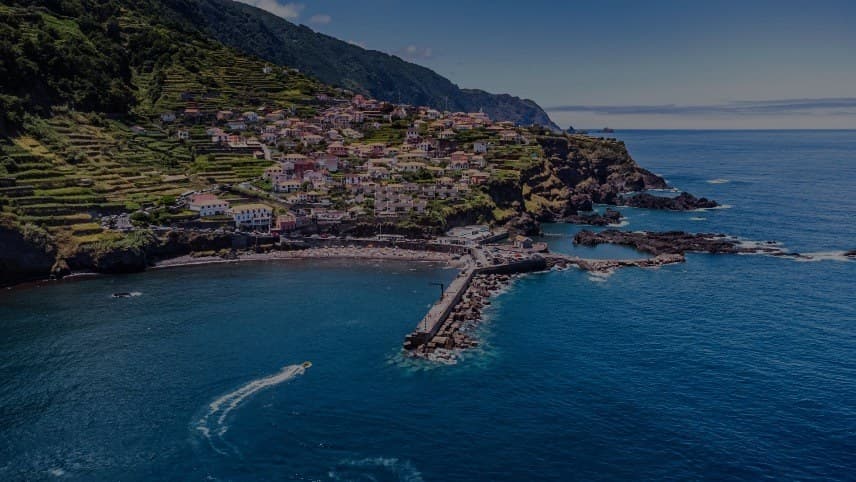
Madeira is a wonderful island to live or invest in, but the climate and geography mean homes here need a bit more care. Steep hills, humid salty air, heavy rain showers, and stone or basalt walls all create challenges that a short viewing can easily miss.
Madeira's steep hills mean retaining walls and drainage systems are critical - drainage issues on slopes can cause movement or collapse. Humid salty air accelerates corrosion of metal fixtures, railings, and concrete reinforcement.
Heavy rain showers can quickly overwhelm gutters, leading to water ingress in walls and roofs. Stone and basalt walls hold moisture when poorly maintained. Pools and plant rooms in villas require thorough maintenance checks.
On steep volcanic terrain where retaining walls, basalt construction and humid salt air hide serious problems, knowing about these risks before you sign the CPCV protects your budget and gives you room to renegotiate or walk away.
A hillside villa in Câmara de Lobos may look spectacular during viewing, but retaining wall drainage issues and corrosion can cost more than
€20,000 to repairMadeira's housing stock spans traditional stone houses, mid-century concrete blocks, and modern apartments. Elevation, aspect, and proximity to the sea all affect what problems to expect.
Traditional stone and basalt construction holds moisture when poorly maintained. Common issues include rising damp, salts, and timber decay. Many older houses have been extended without building permits.
Mid-century concrete blocks in Funchal and Santa Cruz suffer from salt-air corrosion of reinforcement, flat-roof leaks, and aging electrical systems.
Modern villas with pools require thorough checks of pool structure, plant rooms, retaining walls, and terrace waterproofing. Hillside drainage is critical.
PIDS inspects properties across the entire island of Madeira - from Funchal to the north coast and western tip.
Madeira's island climate and terrain create specific recurring problems. Here are the most common issues, where they show up, and typical repair costs.
| Problem | Where It Usually Happens | Signs to Watch For | Typical Fix / Cost |
|---|---|---|---|
| Humidity & Mold | Bowl-shaped valley areas, north-facing slopes, Monte | Black spots in corners and wardrobes, musty smell, condensation on walls | €1,500–€6,000 |
| Salt-Air Corrosion | Coastal zones, seafront apartments, east-facing hillsides | Rust stains on railings and balconies, pitted metal fixtures, corroded AC units | €2,000–€10,000+ |
| Terrace & Flat-Roof Leaks | Modern villas and apartment terraces throughout the island | Ceiling stains, water pooling on terraces, damp patches after heavy rain | €4,000–€15,000 |
| Rising Damp & Salts | Older stone houses in historic village centres | White efflorescence on walls, peeling paint near floor level, hollow plaster | €3,000–€8,000 |
| Retaining Wall Movement | Hillside properties throughout Madeira | Leaning or cracking retaining walls, garden slope movement, wet ground near walls | €5,000–€25,000+ |
| Pool & Plant-Room Faults | Villas with pools across the island | Water loss, algae, corroded pipework, pump failures, leaking shell | €2,000–€20,000+ |
| Outdated Electrical Systems | Older buildings throughout Funchal and rural areas | Old fuse boxes, ungrounded circuits, loose sockets | €3,000–€6,000 |
| Wind-Driven Rain at Windows | North and east-facing exposures throughout the island | Water stains around window frames, condensation inside double-glazing | €1,000–€5,000 |
*Ranges are indicative; we always recommend obtaining quotes from licensed contractors after the inspection. Madeira's unique microclimate - high humidity, salt air, and heavy rain - accelerates many building defects.
Much wetter and cooler than the south. Properties here experience more rising damp, timber decay, and mould - especially older stone houses with poor ventilation.
Salt air and summer heat accelerate corrosion and terrace membrane failure. Bowl-shaped valley topography traps humidity, worsening condensation in lower floors.
Buying in Madeira means retaining-wall drainage on slopes, basalt and concrete exposed to humid salt air, and roof water ingress that rarely show at a viewing. PIDS gives you a full 100+ checkpoint assessment so you know your property's true condition before you commit.
Clear pricing with no hidden fees - confirmed before we book your inspection.
Bilingual report delivered within 48 hours
Fill out the PIDS Home Inspection Form with property details. Receive a clear quote and confirm your booking.
Our qualified local inspector visits the property. You or your agent can be present during the inspection.
Receive your full inspection report within 48 hours. Report includes photos, clear explanations, and recommendations.
Using your home inspection report effectively can significantly improve your buying experience.
Try to schedule your inspection before signing the promissory contract (CPCV). This gives you the strongest negotiating position.
Prioritize Madeira-specific issues: retaining wall stability, roof and terrace leaks, humidity and mould, salt-air corrosion, and pool condition.
Use inspection report photos and descriptions; obtain professional repair quotes to justify price adjustments.
Prioritize safety-critical items like retaining walls and electrical issues; defer minor cosmetic repairs as post-purchase work.
Many Madeira buyers secure up to
5% off the purchase priceusing their PIDS inspection report in negotiations
Before scheduling a professional property inspection, do a quick fifteen-minute self-audit. This helps spot obvious problems early and saves time when the experts arrive.
| # | Area | What to Do | Why It Matters |
|---|---|---|---|
| 1 | Retaining Walls & Slopes | On hillside properties, check retaining walls for cracks, tilting, or wet ground near the base. | Retaining wall failures are one of the costliest and most dangerous problems in Madeira's hillside properties. |
| 2 | Walls & Corners | Check corners of rooms and wardrobes for black mould spots, especially in north-facing or valley properties. | Bowl-shaped topography and high humidity make mould growth very common in enclosed spaces. |
| 3 | Roof & Terraces | Look at top-floor ceilings for water stains, and check terrace surfaces for cracks or ponding. | Heavy tropical-style rain showers make terrace and flat-roof leaks common across Madeira. |
| 4 | Metal Fixtures & Railings | Check balcony railings, window frames, and exterior metal for rust or pitting. | Salt air from the Atlantic corrodes exposed metal much faster in Madeira than on the mainland. |
| 5 | Pool & Plant Room | Check pool shell for cracks, look at pipework for corrosion, and test the pump. | Pool problems are expensive and common - often hidden until after purchase. |
| 6 | Ground-Floor Walls | Look for white powder or peeling paint near the floor on stone or older plastered walls. | Rising damp is common in older stone houses, especially on north-facing slopes. |
| 7 | Windows (North/East Facing) | Check window frames and surrounds for water staining or rot from wind-driven rain. | North and east-facing windows receive the most rain in Madeira - frame condition is critical. |
| 8 | Electrical Panel | Look at the fuse box - modern labeled switches are good; old ceramic fuses need replacement. | Many older Madeira properties still have outdated wiring that poses a safety risk. |
If you notice a strong musty smell, retaining wall cracks, or ceiling stains, get a professional inspection before making any decision.
No. Only the energy certificate and certain safety checks are required by law. However, Madeira's unique geography and climate - steep slopes, high humidity, and salt air - mean hidden defects are very common and strongly warrant a pre-purchase inspection.
Get your inspection by qualified Portuguese architects and civil engineers - from €450.
Check Your Price